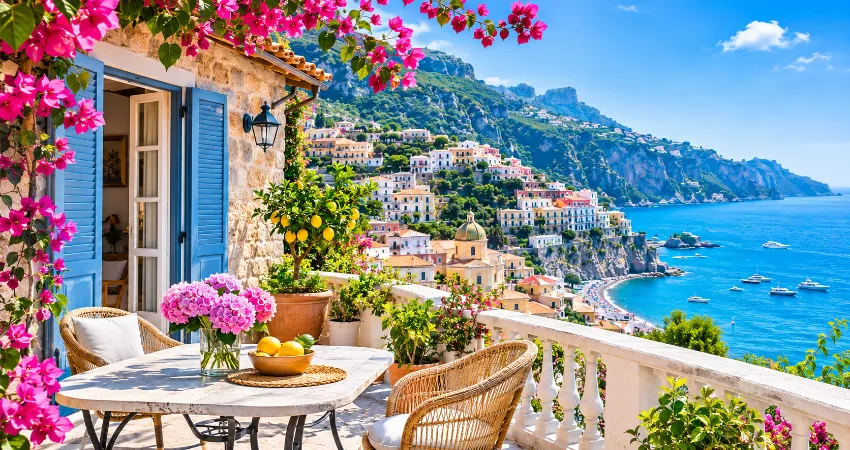
Buying a holiday rental property in Europe can offer two benefits: a place to enjoy personal holidays and an opportunity to earn accommodation income. From Mediterranean beaches to historic Italian towns, Europe offers destinations with different visitor profiles, property types, and seasonal demand.
However, choosing the right location requires more than finding an attractive apartment near the sea. Tourism trends, purchase costs, local rental regulations, maintenance expenses, and accessibility all influence whether a property is financially practical. A popular destination does not automatically guarantee profitable bookings.
According to Eurostat, guests spent approximately 951.6 million nights in short-stay accommodation booked through major online platforms across the European Union in 2025. This demonstrates substantial demand, but competition remains significant. The following ten areas are worth researching for their tourism appeal and potential suitability for holiday letting.
1. Algarve, Portugal
The Algarve remains one of Portugal’s most recognizable holiday destinations. Its sandy beaches, golf courses, coastal towns, and relatively mild winters attract visitors interested in both summer holidays and longer seasonal stays.
Areas such as Lagos, Albufeira, and Tavira serve different markets. Lagos appeals to visitors seeking beaches and outdoor activities, while Tavira offers a quieter atmosphere. Buyers should compare established resort apartments with properties in residential neighborhoods. Portugal’s local accommodation system, known as Alojamento Local, requires careful registration checks, including any municipal restrictions.
2. Costa del Sol, Spain
Spain’s Costa del Sol attracts international visitors through its beaches, golf facilities, restaurants, and connections to Málaga Airport. Marbella, Estepona, and Mijas provide different property markets, from premium coastal homes to comparatively modest apartments.
Its appeal extends beyond peak summer, particularly among visitors seeking winter sunshine. However, property prices, community fees, and competition can affect returns. Spain requires national registration for relevant short-term rental listings on online platforms, alongside applicable regional and municipal permissions. Buyers should establish whether a specific property can legally operate before purchasing.
3. Costa Blanca, Spain
Costa Blanca offers a combination of beaches, accessible airports, established residential communities, and different property price segments. Alicante, Torrevieja, and Jávea are particularly useful locations to compare.
Unlike destinations dominated by luxury villas, Costa Blanca includes smaller apartments and family accommodation. This gives buyers flexibility when evaluating their budgets. Demand can vary considerably between neighboring towns, especially outside summer. Check walking distances to beaches, local transport, building rules, and the availability of tourist accommodation authorization under Valencian regulations.
4. Tenerife, Canary Islands, Spain
Tenerife offers a distinctive advantage: a mild climate that attracts visitors throughout much of the year. Southern areas such as Costa Adeje and Los Cristianos are established holiday destinations with beaches, restaurants, and visitor services.
For investors concerned about seasonal fluctuations, Tenerife deserves consideration. Nevertheless, year-round tourism does not mean constant occupancy. Competition, community rules, and evolving Canary Islands holiday-home regulations require attention. Apartments with convenient airport access and practical amenities may appeal to a wider visitor audience than properties relying entirely on luxury features.
5. Madeira, Portugal
Madeira is popular for its dramatic landscapes, walking trails, gardens, and outdoor recreation. Funchal provides city conveniences, while coastal communities offer quieter accommodation settings.
The island can appeal to couples, nature enthusiasts, and visitors interested in extended stays. Unlike conventional beach destinations, Madeira’s accommodation market benefits from varied travel motivations. Buyers should examine hillside access, parking availability, humidity-related maintenance, and municipal accommodation rules. A beautiful property with difficult road access may create operational problems for both guests and maintenance teams.
6. Crete, Greece
Crete combines beaches, historic attractions, traditional villages, and a well-established tourism industry. Chania and Rethymno are interesting markets for buyers seeking properties near cultural attractions and coastal amenities.
Its accommodation options range from town apartments to detached villas. However, summer demand may be substantially stronger than winter demand in resort locations. Greece operates a short-term rental property registry administered by its Independent Authority for Public Revenue. Registration, tax reporting, and applicable accommodation standards should be verified before estimating achievable income.
7. Istria, Croatia
Istria is a compelling destination for visitors interested in historic towns, beaches, food, and countryside experiences. Poreč, Rovinj, and inland villages offer contrasting holiday accommodation opportunities.
Croatia’s tourism authority reported approximately 30.3 million overnight stays in Istria during 2025, making it the country’s leading county by that measure. This supports its tourism significance but does not establish individual property profitability. Buyers should examine seasonal vacancy, licensing requirements, and whether renovation costs make traditional stone houses financially practical.
8. Tuscany, Italy
Tuscany offers a different holiday rental proposition. Rather than depending primarily on beaches, it attracts visitors interested in art, architecture, rural landscapes, food, and historic towns.
Lucca, Siena, and the countryside around Florence provide distinct accommodation markets. Rural villas may appeal to families and groups, while apartments can suit shorter cultural visits. Older buildings can involve substantial restoration and maintenance expenditure. Italian registration requirements, including applicable national identification rules, must be reviewed alongside regional and municipal obligations before advertising accommodation.
9. Puglia, Italy
Puglia has a recognizable architectural identity, traditional villages, and attractive Adriatic and Ionian coastlines. Ostuni, Monopoli, and the Valle d’Itria offer different possibilities for buyers researching holiday accommodation.
Restored traditional homes may attract visitors seeking distinctive experiences, but unusual architecture can also increase renovation expenses. Buyers should inspect structural condition, legal building status, and access to utilities. Coastal proximity alone is not enough: local services, parking, and reliable property management are equally important when evaluating a potential purchase.
10. French Riviera, France
The French Riviera is associated with coastal scenery, established tourism infrastructure, cultural attractions, and international travel connections. Nice, Antibes, and Cannes represent different segments of this market.
Properties may appeal to short-break travelers, summer visitors, and guests attending regional events. However, high acquisition costs and local accommodation restrictions make careful financial modeling essential. France has strengthened its furnished tourist accommodation framework, with registration and municipal controls playing important roles. A legally compliant apartment in a convenient location may be more practical than an expensive property with uncertain rental permissions.
How to Choose the Right Holiday Let Property?
The best location depends on the buyer’s budget, preferred guest market, and intended ownership strategy. Mediterranean resorts may generate concentrated summer demand, while cities and destinations with diverse attractions may have broader seasonal appeal.
Before committing to a purchase, calculate expected annual rental income using realistic nightly rates and occupancy assumptions. Deduct management charges, cleaning, utilities, insurance, taxes, repairs, and booking platform fees.
For example, a property charging €120 per occupied night for 150 nights produces €18,000 in gross annual accommodation revenue. This is an illustrative calculation, not a market forecast. Net income could be considerably lower after operating expenses.
Buyers should also verify ownership records, local permissions, financing terms, and restrictions affecting foreign purchasers. An independent local lawyer and qualified tax adviser can help identify obligations that may not be obvious from property advertisements.
Frequently Asked Questions
1. Is buying a holiday let in Europe a good investment?
It can be worthwhile when purchase costs, legal permissions, and operating expenses align with realistic rental demand. However, income varies by property and season. Buyers should assess potential net returns instead of relying on advertised nightly prices or broad tourism growth figures.
2. Which European destination offers year-round rental opportunities?
Tenerife, Madeira, and parts of southern Spain may attract visitors outside the traditional summer season. Nevertheless, occupancy varies by neighborhood and accommodation type. Reviewing monthly booking patterns is more useful than assuming favorable weather guarantees consistent income.
3. Can foreign buyers purchase holiday rental properties in Europe?
Foreign ownership is possible in many European countries, but eligibility, procedures, financing, and restrictions vary. Non-EU buyers may face additional conditions in certain markets. Independent legal advice is important before signing contracts or transferring deposits.
4. What expenses should holiday let owners expect?
Common costs include purchase taxes, legal fees, insurance, utilities, cleaning, maintenance, platform commissions, and property management. Some buildings also charge shared maintenance fees. Owners should maintain a reserve for unexpected repairs and periods without bookings.
5. Do holiday rentals require special licenses?
Many destinations require registration, authorization, or compliance with specific accommodation rules. Requirements can differ between municipalities within the same country. Buyers should confirm permission for their exact property rather than assuming all homes in a popular resort qualify.
6. Are apartments or villas better for holiday letting?
Apartments may involve lower acquisition and maintenance costs, while villas can accommodate larger groups. Neither is automatically more profitable. The decision depends on local guest preferences, occupancy, management expenses, and the total purchase price.
7. How important is proximity to an airport?
Convenient airport connections can make accommodation more attractive, especially for shorter visits. However, accessibility also depends on public transport, road conditions, and transfer costs. Properties far from essential services may require guests to rent vehicles.
8. Can owners use their holiday property personally?
Owners can generally reserve their properties for personal use, subject to applicable ownership and rental arrangements. However, personal visits during popular holiday periods reduce available booking nights. These dates should be included when estimating annual income.
9. How can buyers estimate holiday rental income?
Compare similar licensed properties in the same neighborhood, examine seasonal prices, and estimate realistic occupied nights. Multiply the expected average nightly rate by occupancy, then subtract operating expenses. Testing conservative scenarios helps reveal financial risks.
10. What is the biggest mistake when buying a holiday let?
One major mistake is purchasing based solely on location or tourism popularity without confirming legal rental eligibility and operating costs. A thorough property inspection, independent legal review, and realistic financial forecast should come before the final purchasing decision.
Conclusion
Europe offers diverse holiday rental opportunities, from the Algarve’s coastal resorts to Tuscany’s historic countryside. Each destination has advantages, limitations, and regulatory considerations. Successful property selection requires balancing visitor demand with affordability, accessibility, legal compliance, and realistic operating expenses. Careful research is more valuable than choosing a destination based on popularity alone.


Leave a Reply